Bird Photography Tips
 |
| #birdphotography |
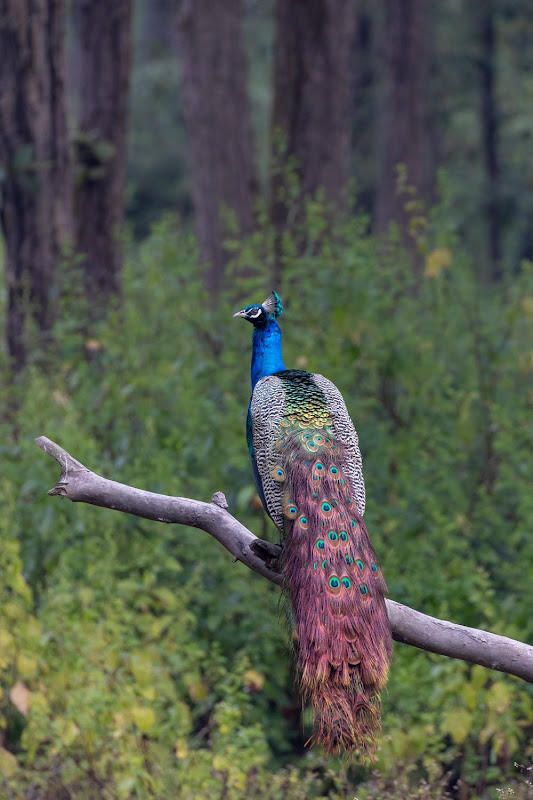
Many people ask, how are pictures of birds? There are many articles and lessons on bird pictures online. Here I will share my thoughts and my knowledge on this subject. Photography of birds is one of the most popular forms of nature photography and is mygreatest passion.
Photography of birds is very interesting and challenging. You will need special skills and equipment for capturing attractive bird pictures. It is not possible, but possible, to take large pictures of birds for the general purpose of zooming in or pointing and shooting the camera. However, having the world's best photographic equipment to do this work does not guarantee success. It seems that the most successful bird
photographers are only skilled at
photography. And they have a deep understanding of the behavior of birds and their habitat. Most importantly, they are all deeply in love with their subjects.
I will share my experience with you some bird photography tips.
Check your Histogram
Always check your histogram to ensure correct exposure. This is a graph that shows the distribution of pixels by tones from black on the left, to white on the right. Don't worry about the height, but you should make sure the pixels don't end at the edges - if they do that then the details of the image are lost. You want to keep the details in the brightest and darkest parts of the image. There will be times when this is not possible, such as having a white bird in a very dark background.
But in that case, by revealing you will keep all the important details of the feather in the bird's white feathers. Similarly, you should try to avoid losing information about the black bird.
 |
| #birdphotography |
Focus on the Eyes
Look at the picture of the bird and you will find yourself pulling it in the eye, so if it is not sharp it may not work. Therefore, make sure that your focus is on the bird's eye view. Autofocus can promote lazy formation, and you may focus on the bird's body. This may be fine, but if you use a shallow depth of the bird's body it may be very sharp, while the eye may be less focused and this will erode your image.
 |
| #birdphotography |
Camera and Settings
Photographing birds requires a good focus length. No second thoughts about it. But you don't have to break your bank to get a super telephoto lens like 600mm. Go with a fixed length about 300mm. Make sure the lens has an image stabilization feature such as VR (Vibration Reduction for Nikon) or IS (Image Stabilization for Canon). Birds are always active. To stop an action you need a good number of frames per second. A camera body with a frame value of at least 5 fps is good to take action. Focus is essential to success. A loose bird destroys the image. Get a camera body with a decent number of focus points. That's where the better. Try at least 39 points to focus on and beyond. Also, check the number of cross-reference points available. And, that's where it's better.
 |
| #birdphotography |
Composition
Your message should be clear and concise. Convey your message even though your image has a simple yet solid format. The design of bird pictures is not difficult at all but is often overlooked.
Here are some design steps to make your bird pictures stand out:
• Use rule three to keep the bird indoors.
• Provide adequate breathing space as you walk or look.
• We aim to light or color the difference between this bird and the background. This helps the autofocus to focus faster. Also, it helps to make the bird stand out.
• Fill the frame with a bird to focus only on the bird.
• Use a clean or clear background and avoid distractions at all costs. It is not always possible to find a good make in a field, even if you have to try your best.
If necessary, never hesitate to rename an image during the processing phase. The first bird (or late) gets a gun. The time of day can be used to your advantage in bird pictures. Nighting birds are often caught while returning to their nests early in the morning, while others will eat their breakfast. Evening and evening can also provide excellent opportunities.
These moments of the day also provide
some of the most amazing and acclaimed lighting.
 |
| #birdphotography |
Keep the ISO Setting High.
The birds are moving fast. If you
understand how to use the Exposure Triangle, you will know that this means that you will want to use the advanced ISO settings for photography of birds rather than say, standard landscape. Next, this means that there may be a lot of noise in your shots, but needing to remove a little noise is better than a blurry image. This is one type where many photographers rely on ISO default on their DSLRs. Most modern cameras will allow you to set a lower
shutter speed and allow the camera to adjust the ISO setting to a minimum that will allow that speed.
The First Bird Captures the Worm
Get out early! Other opportunities and excellent light come as soon as dawn. Most birds (raptors are not the same) are very active in the morning. When the sun is low on both ends of the colors it is recommended, and by shooting in the light you can create beautiful silhouettes when you shoot towards the sky. If you can shoot in the light and face the dark background your bird will come back; this works best with light or white birds as the light will shine through the feathers. Ignore cloudy days though, especially for white birds where the details of the hidden feathers, for example egrets, can be shown to have a positive effect.
 |
| #birdphotography |
Be Motivated
Look at other photographers working with bird art; to develop the ideas for the photos you want to take, and thus your style will emerge. The more sources
of inspiration you want, the more comprehensive and varied your style will be. Never be afraid to try angles and techniques. Let your imagination run
wild.
That's all about bird photography tips . If you have any questions please do let me know and i'll be more than happy to answer your questions. Until next time take care guys. Bye:)
Comments
Post a Comment
If you have any doubts.
Please let me know!!